Disciplinary Text: Graphic Novels
Graphic Novels: An Introduction into Loving Literature
As many of us have already seen, we have an upcoming epidemic (and I'm not talking about Covid-19). I see more and more youth every day exclaim their hatred for reading. Out of the 60 sophomores I teach at the Barack Obama School of Career and Technical Education, I only have about 4 students who enjoy reading. Reading, in the school context, is projected as a huge task that is chalk full of activities to do in class. Students equate reading with grades and therefore dislike reading. Many students also get lost in text, do not feel connected to the reading, or just simply find the text boring. For these reasons and more, I decided to try to find a way to make reading fun for my students, this way their more apt to participate and more likely to develop an enjoyment of reading.
Graphic novels were the first thing to come to my mind to foster an enjoyment of reading. They are, typically but not always, low stakes reading. They are easy to follow along as well as including imagery for students who struggle with visualization skills. Graphic novels encompass a wide variety of fiction and nonfiction topics. In fact, graphic novels are so vast that classics can even be taught through them. They even provide such a wide array of topics, students could eventually pick their own novel based upon a topic they hold near to themselves.
I selected a variety of texts based upon my 10th grade classes. My school is Urban and mostly black, so it is important to keep texts relevant to them: I've been told by one of my students "I don't want to read any book about no old dead white guy". I've ensured that as many texts as possible were written by black authors and represent my students in an authentic light. I also brought forth texts to help introduce them to issues they may not be aware of. These texts can be used pretty interchangeably together. They all talk of issues based upon discrimination (besides text 6). Yummy makes for a great introduction to graphic novels, but My Hero Academia may be better in some cases if students like Anime (mine do).
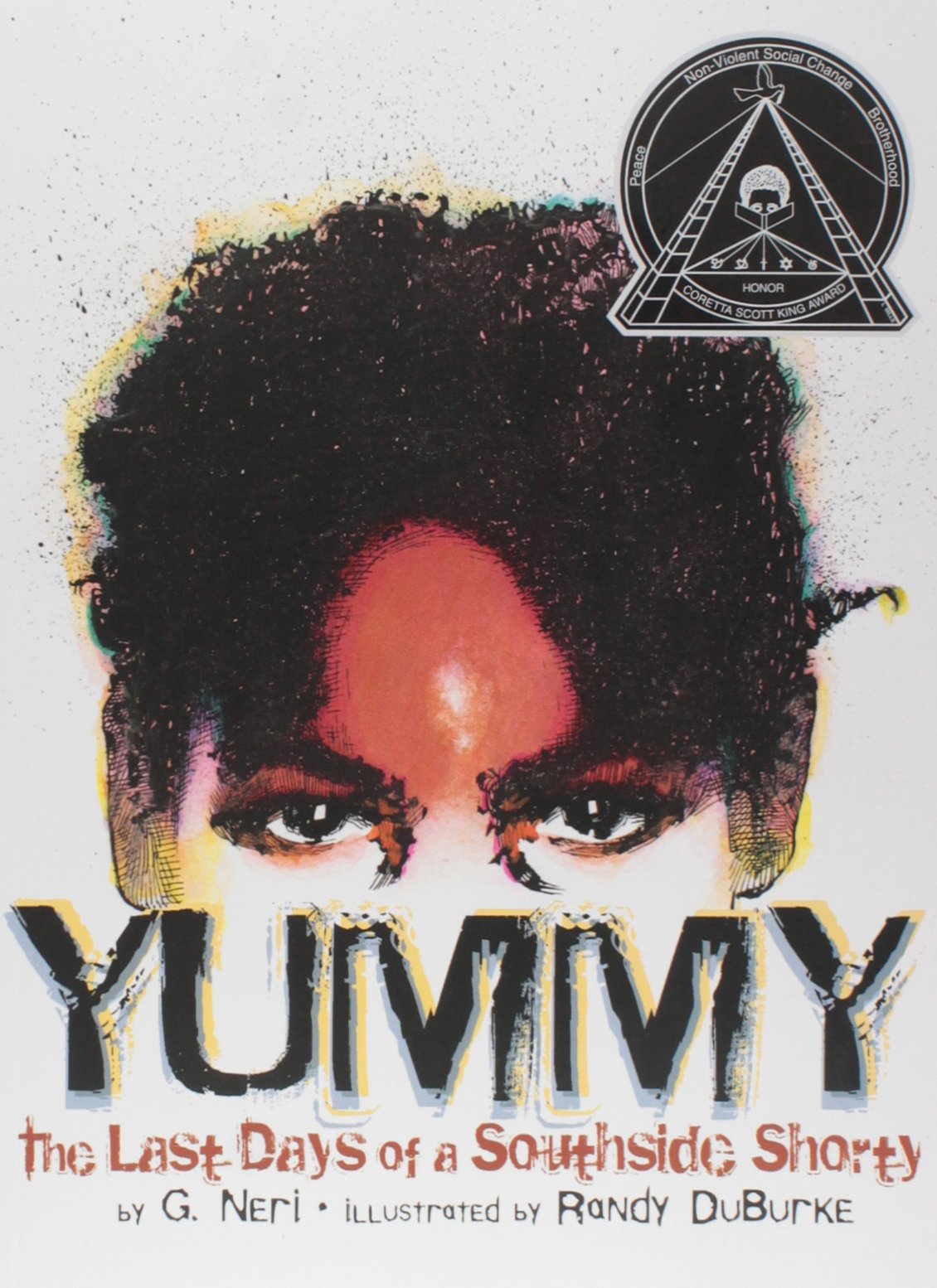
Text 1 (Print) Yummy: The Last Days of a Southside Shorty
Neri, G., and Randy DuBurke. Yummy the Last Days of a Southside Shorty. Ernst Klett Sprachen, 2016.
Yummy is a nonfiction book written by G. Neri. It focuses on the life and tragic death of Robert "Yummy" Sandifer, an 11 year old child who got messed up in gang life and took a the life of a young girl accidentally. This takes place in Chicago, 1994: one of Chicago's highest years of homicide. This book challenges the light in which we see Yummy: a cold blooded killer who was beyond saving, or a boy without parental guidance becomes a victim of his circumstances.
Quantitative:
Quantitative Data received from: https://lexile.com/
Age Range: 10-13
Page Count: 96
Lexile Score: GN510L
While the age range for this book is 10-13, I believe it to be better suited for older ages. This book talks about inequities between families with similar socioeconomic status that younger audiences would not pick up upon. Younger readers would also fail to see the struggle of viewing Yummy as a victim, rather than just a killer. The content of this book deals with murder, gang violence, and betrayal; which can be topics that are too harsh for younger audiences.
Qualitative:
Genre: Graphic Novel
Graphic novels, obviously do not contain the same types of text as prose may have. It is important to take into consideration not only what is said, but the images displayed throughout the text. One that that specifically matters in Yummy (which is black and white) is the utilization of contrast in the images. Contrast (brightness and darkness) is utilized to make certain scenes look more menacing and certain scenes to seem more light hearted. It is also utilized on Yummy quite often. When he does something bad he is often seen drawn darker and with more shadow, while when he is acting like a child or innocent he is often drawn lighter and shows more expression. The imagery presented plays a huge role in how the story is read.
Theme: Being a victim or killer may not be as black and white as initially thought.
The main theme of this graphic novel is the duality of innocence and culpability. Yummy, obviously, is a murderer and therefore a killer, but one really must think if this is his fault or not. Yummy's circumstances were harsh. He grew up with a father whose incarcerated, and an abusive mother who is in and out of jail. He lives with his grandma who watches over a minimum of 20 grandchildren on a given day. Yummy therefore has no parental figure, so who is he supposed to look up to? Yummy, along with so many other misguided youth, are taken advantage of by gangs because they could commit heinous crimes and be out of juvey by age 21. The gang itself, was like a parent to Yummy. They taught him things, provided for him, and was the closest thing he had to a family. Is it Yummy's fault his parents weren't around? This theme would be too much for younger readers to understand fully and therefore is more fit for an older audience.
Task & Reader Complexity:
This text is meant to spark an interest in reading and graphics novels. Many of my students have a general dislike of reading, especially in school settings. This book is an easy read (we can read it in one block period together) and has a Black protagonist. It is important that my students feel represented in the texts we read.
My students are growing up in Milwaukee. As I said in my into I teach to mostly black students. This graphic novel showcases black voices and the vast cultural differences that are alive in their community. There are opinions of church goers and pastors, of gang members which is seen though the fictional narrator's brother, of prominent news casters, lawyers, mom and dads, and kids. The POV is from an 11 year old fictional character made up to fill in the gaps between what is known from Robert "Yummy" Sandifer's actual case and life and what isn't known.
Yummy also speaks of the famous Chicago projects, including normal street. One of my students had stated that they knew of normal street, but never knew that they used to be projects. Many students can make connections between Chicago and Milwaukee, since they are both midwestern cities about 2 hours apart from each other.
Upon using Reading Diversity Lite's text complexity rubric to check for diversity in the text, I checked off more "yes" than "no". This means that Yummy is pretty diverse. I attribute this to the illustrations that showcase what life in Chicago was like, the authentic usage of language and AAVE, and the utilization of historical references (such as the actual quotes from news castors and lawyers on television).
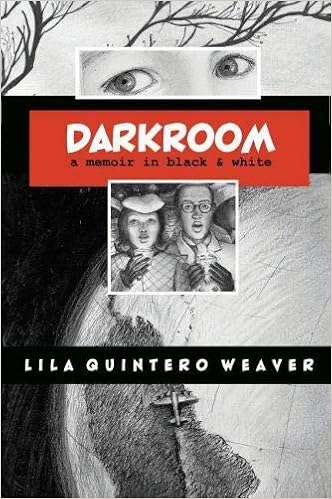
Text 2 (Print) Darkroom a Memoir in Black & White
Weaver, Lila Quintero. Darkroom: A Memoir in Black and White. University of Alabama Press, 2012.
Darkroom is an autobiography by Lila Quintero Weaver. She witnessed key moments in the civil rights movement, but struggled with discrimination. Her family moved into the Jim Crow south and she was neither white nor black. As a Latina, she struggled to fit in and saw all the horrors of racism of the south. This book touches upon race, identity, and childhood. It also gives a firsthand account of what life was like during the Jim Crow era.

Text 3 (Multimodal) The Boat
Le, Nam. The Boat. Vintage Books, 2009.
The Boat is a unique digital experience that broadens the field of graphic novels. This is an adaptation of the book where motion and sound are added to enhance the experience. This speaks of the struggles of Vietnamese people fleeing their country amidst war to attempt to find freedom or refuge.
You can access this digital experience... here
Quantitative:
Quantitative data derived from https://hub.lexile.com/analyzer
Lexile Range: 810L - 1000L
Grade Level: 9-12
Time to read: around 20ish minutes
Pages in original book: 288
I agree that this book is meant for high school age students. It utilizes vibrant language that students may not understand. It also speaks of a different culture that students may also not understand. Sentences have varying lengths and therefore makes for a better reading.
Qualitative:
Knowledge Demands: An important preface is needed before diving into this text. Students will need to learn about the Vietnam war and its impact on it's peoples. For this reason a documentary may be viewed in a prior class block. With out knowing the context of which these stories were written, they will be far less impactful. Giving students a chance to have something to scaffold off of is pertinent for this reading.
Theme: The difficulties of emigration can often go unseen, especially in dire circumstances.
This is a harsh theme than many students will not know anything about. This shows the harsh circumstances that people can withstand and go through in order to escape political turmoil. This is relatable to now in many ways too since we have, currently refuges from Afghanistan in Wisconsin escaping war just like in the reading. It would be a great way to also implement current events in the classroom so that students can see the connections from the reading to the real world.
Words in need of extra support: (from part 2 alone) hibiscus, Communists, attenuated, vibrato, frugality, abnormality, and insolent
Task & Reader Complexity:
The purpose of this text is to teach students on how to make text to world connections. By prefacing this text with the Vietnam war, we allow students to attempt to connect the reading with a documentary which is a direct text to world connection. These connections should come easier because the documentary is directly about the Vietnam war. This could then be connected with the the article linked about Afghani refuges. This may be slightly more difficult to create connections because the circumstances are not directly the same, but are similar. Allowing students to make broader text to world connections gives readings a sense of relevancy for my students.
Upon using Reading Diversity Lite's text complexity rubric to check for diversity in the text, I mostly selected "yes" making this text diverse. It utilizes authentic voice, but I don't think it mirrors the identities in my classroom. I think it is important to note that my students may be unaware of the refuge situation in Wisconsin and by allowing themselves a chance to learn about it has a power to be very valuable. This text is meant to motivate student critical thinking of the world around them. It should be engaging due to the dramatic nature of the reading and enable students to see the struggles others face that they may be unaware of.

Text 4 (Multimodal) Seven Digital Deadly Sins
“Seven Digital Deadly Sins.” The Guardian, Guardian News and Media, http://digital-deadly-sins.theguardian.com/.
The Seven Digital Deadly Sins is the farthest stretch we strayed from Graphic Novels, but in a sense, this is still one. It focuses on media consumption and creation that we all participate in (usually in unhealthy amounts). This allows the reader to participate by watching videos, reading text, answering questions, and viewing polls/infographics. This is truly a graphic novel that utilizes more than visuals and sound, and is truly interactive.
You can access this digital experience... here

Text 5 (Culturally Relevant) My Hero Academia
Horikoshi Kōhei, et al. My Hero Academia. VIZ Media, LLC, 2019.
My Hero Academia focuses on a young boy who, in a world people with superpowers called quirks, has no quirk of his own. It talks about the struggles of being different/an outcast along with how he develops and curates a power that is bestowed to him. This text is one example of how important it is to never give up.
You may be wondering how this is culturally relevant. Well, a large amount of my students watch anime daily and I have connected with many of them through it. By showing them what the shows they like were written as originally, it could spark a joy in reading.
Quantitative:
Quantitative Data received from: https://lexile.com/
Age Range: 9-13
Page Count: 192
Lexile Score: GN280L
While this read may seem easy, there are many conversations that can be had/connections to be made that allows this book to serve a purpose of higher education. This conversation can bring up talks about inequalities in this book for the quirk-less people between the people with quirks. This can be connected to our world by talking about the inequalities we see in our city. How do they compare? We can also talk about the differences of how Japanese school is portrayed compared to our school. The many discussion points this book allows it to serve a purpose in the high school classroom.
Qualitative:
Theme: Putting time, effort, and thought into your dreams can make them become a reality.
This uplifting message can be beneficial for my students, especially because of how often they are restricted. They are told "no" often. I hear it in the school, in the streets, and from the students themselves. By having a positive message, such as your dreams are achievable, can put students in a asset mindset. It also talks about overcoming obstacles, which shows that there are always bumps on the way to greatness. Not everything is easy. There are many subthemes that come up in later volumes. So if this were a class favorite, we could pursue later volumes later in the class that tackle the moral greyness of good and evil along with the struggle to fit in in high school.
Genre: Manga
Manga is a very specific type of graphic novel based out of Japan. It, therefore, is translated from Japanese to English. This leads to a less complex text with equates to its low Lexile score. This doesn't diminish the themes and messages the story portrays... They just need to be restructured for classroom use. Manga is a great entryway into reading, and is fun and quick-paced too. Showing students that an almost 200 page book can be read in one short sitting could be beneficial to students who feel intimidated by reading.
Since there is a low Lexile score, I don't think students would struggle with any vocabulary.
Task & Reader Complexity:
This is yet another text that is meant to bolster an interest in reading. Many of my students love anime, as I said before. This is a great way to bring their specific interests into the classroom, and it would show students that their interests and education can be combined for a more enjoyable experience. Since the graphic novel is Japanese, I doubt there will be much diversity in the text, but conversations about this and connections made can help to bolster this.
Upon using Reading Diversity Lite's text complexity rubric to check for diversity in the text, I some "yes" and a few more "no". The text does succeed in connecting encounters at home along with interests through because of my students enjoyment of anime. It is important to add student interest to make reading easier and more enjoyable. While the voice of the protagonist may not match their own, they'll see the struggle of a kid who society basically leaves behind. This can lead to conversations about what the class would connect this to in real life. That conversation itself can lead to conversations about mental illness, homelessness, bullying, and so much more based upon classroom discussion.

Text 6 (Culturally Relative) WebToons
WebToon is the epitome of student choice. This website is home to thousands of web-based graphic novels. This would allow students to find a graphic novel based off their interests (and get it approved by me) that could be great for independent reading projects. Students love being able to have power in their education and this is a great way to give them the power of choice.
Graphic novels themselves are the gateway into becoming reading lovers. We can't expect students to come in loving reading because most students simply don't. By showcasing graphic novels in so many different ways, they are bound to find a modality they enjoy. We have everything from interactive readings, to standard paper graphic novels, all the way to writings based off of shows students enjoy. Once that joy is reached in reading, other texts may be implemented based upon what students enjoyed the most. Sparking an interest is vital in creating a generation of readers. Graphic novels are very often looked down upon in the classroom as a cop-out to reading novels, but graphic novels are the future to introducing students into reading for fun. Discussions are needed to make each graphic novel, no matter the text, applicable in the classroom. So if you want to teach marvel, go ahead. If you want to show students Shakespeare in away they'd understand, use a graphic novel. And finally, if your students or kids don't love reading, find them a graphic novel. There is guaranteed at least a few based on their interests.


Hi Dylan, I think you do a great job with the culturally relevant section. I personally use WebToons and have friends that use it as well. I think it is great because along with choosing from different kinds of stories and storytellers, you can also choose based on what art styles they like. I like the accessibility of WebToons, it is free and downloadable onto any device. Thus giving students access to more graphic novels than ever before. Your connections between task and reading are well thought out and you relate the lessons to what your students are interested in to facilitate learning nicely! Great job!
ReplyDeleteHi Dylan, I definitely agree that graphic novels can be a really effective gateway to getting students to enjoy reading so I'm really happy you've assembled such a great text list! You cover so many different types of graphic novels that most students are bound to vibe with at least one of them! Great breakdowns too! Good job! - Siraj
ReplyDeleteHi Dylan,
ReplyDeleteI really like that you chose graphic novels that not only are culturally diverse, but also that are relevant and in line with students' interests! I am not personally a huge fan of graphic novels, but you presented them in a way that even made me interested in checking a couple of these out! I especially liked that you used WebToon as a text set choice; giving students the option to choose something that fits the curriculum but also interests them is such a good way to help ensure that the students' interests are peaked! Thanks for sharing such a great post!
Hey Dylan!
ReplyDeleteI appreciate the way you broke down these texts, specially the culturally relevant sections! I want to dig into using graphic novels in my classroom, and your work has put me in the right direction!
The boat sounds so interesting! I used to do a refugee unit and used Khaled Hosseini's children's book Sea Prayer to introduce it. I feel like those two texts would go together perfectly!
Thanks for your hard work and insights! I learned a lot!
Rayen
Dylan,
ReplyDeleteYour selection of texts are the definition of culturally relevant. I am putting Yummy on my to read list for sure. I love that you choose to look at graphic novels because I think they are such a great way to get non readers and visual learners into reading. -Grace Armstrong
Hello Dylan!
ReplyDeleteI love how you kept your students in mind when selecting your texts, including the ones about people from different cultures who also have their hardships too! That’ll help them with critical thinking, making text to world connections, and having meaningful conversations in the classroom! I’m not sure if this has happened to you yet but some kids are BLOWN away when they find out that there are mangas and/or light novels behind most of the animes they watch! Then it’ll get to a point where they debate about which is better: manga or anime? I added your text selections to my “to-read list” during my time off work! Thank you for sharing!
Dylan, you do a very nice job presenting your texts. Your collection of texts does much to introduce and open up understandings of graphic novels and digital/multimedia literature in general. I especially appreciate how well you include some cutting edge graphic literature experiences such as The Boat and the Deadly Sins. I agree with you that we need to really consider what it is about reading and narrative that connects to our humanness in order to hopefully ignite interest in these narratives. I look forward to seeing which of these texts you choose to include in the scaffolding project.
ReplyDelete